I was recently reading a map of emotional needs based on the work of social scientist John Heron, and was quite moved at the simplicity and relevance to our present life on our planet.

Heron tells us that to love and be loved, to understand and be understood and to choose and be chosen are the minimum basic emotional needs that must be met to be emotionally functional. When these needs are met the results are acceptance of self and others; ability to make sense of the world, ability to perform and achieve.
How does this relate to group facilitation?
As group facilitators, part of our role is to create the conditions that enable participants to achieve these states individually and collectively - by accepting group members as they are in their diverse entirety; by facilitating understanding of concepts and processes and to upskill participants to perform and achieve in their chosen field of facilitation.
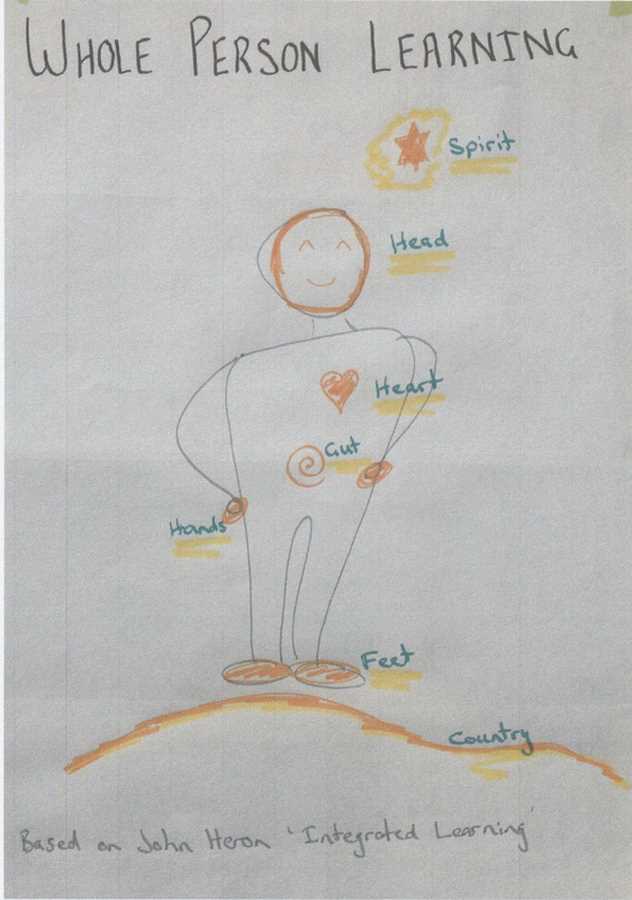
Heron’s Map of Emotional Needs is tabled in Cooperacy, a new way of being at work by Dale Hunter, Anne Bailey and Bill Taylor. The book was gifted earlier this year from Zenergy Global to all facilitators and those interested in becoming facilitators, and it is a treasure trove of information. We use the first chapters in our Art of Facilitation training. It clarifies whole personhood, the relationship between agreeing and aligning, the link between being and doing, how to create better peer relationships, and how to work collectively to generate collective intelligence.
Dominant western culture has given undue prominence to the rational, conceptual thinking aspects of our humanness at the expense of other capacities. They have been suppressed, treated as less important and in some cases even seen as dangerous. Our history of elevating the prominence of rational thinking has diminished our access to the ‘being’ world of wholes.
General systems theory and quantum physics is a longer conversation, but suffice to say, there is nothing missing in our beingness. It is a state, not an emotion. When we are being all of who we are as leaders and facilitators we can meet the participants in our teams and groups in their unique diversity.
Facilitating from our beingness (aka whole personhood) enables us to fulfil emotional needs without repressing them. The actions we take come from our beingness and they become generative. Presence, friendly relationships, alignment of purpose, power with, group synergy and collective wisdom all stem from broadening our way of being with each other.
Connecting with our whole selves enables connection with group members in their whole beingness.
Rational thinking is one tool that we can use but not the only one.
There are so many more aspects of whole personhood. And how important is it to be loved, to be chosen, to be understood at this time in our history?
If you would like to download the Cooperacy book, please click here> Resources